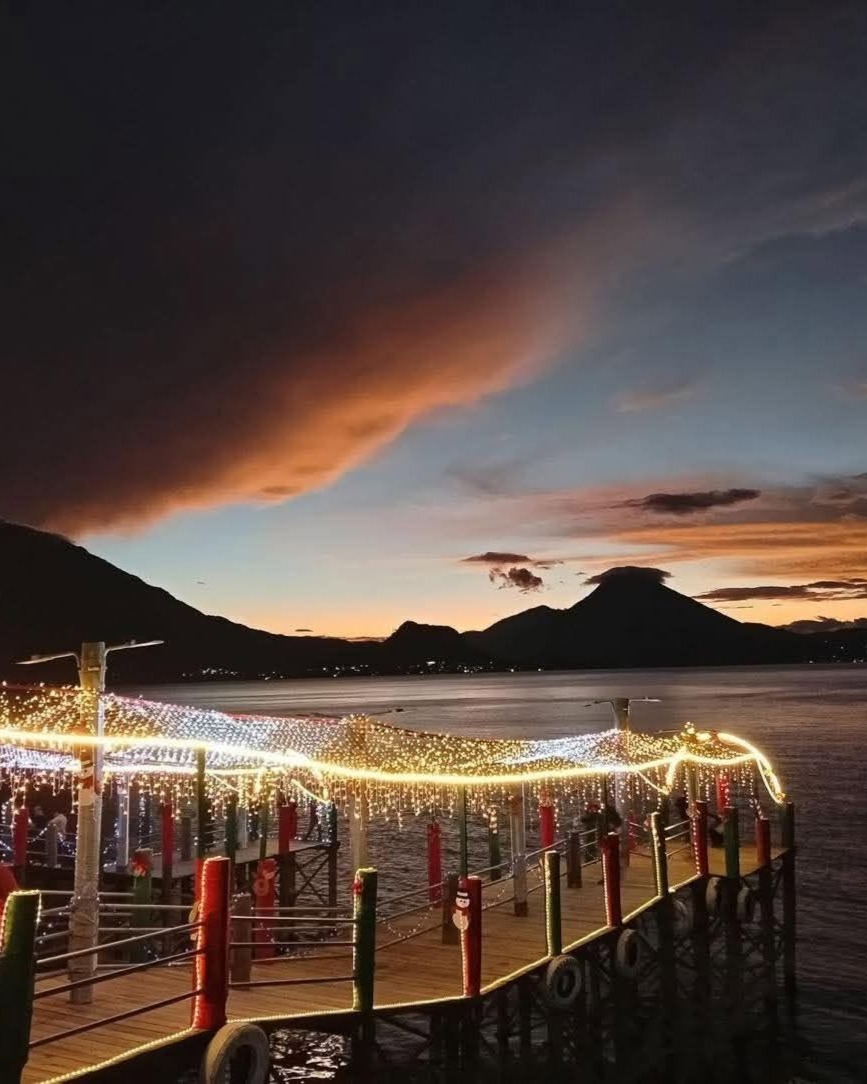
The Three Volcanoes
A private launch at first light; coffee from beans your captain harvested. Stillness, then stillness.
DiscoverA volcanic caldera lake ringed by Maya villages, each with its own dress, dialect and saint — crossed by private launch while the water is still glass.
Aldous Huxley called Atitlán the most beautiful lake in the world, and few who stand on its shore at dawn argue. A thousand feet deep and held in a collapsed volcanic caldera, it is ringed by three volcanoes and a dozen Maya villages, each fiercely distinct — its own language, its own woven dress, its own patron saint.
The lake rewards stillness. We compose days that begin on the water before the wind rises, move through a single village at the pace of its market, and end on a private terrace as the volcanoes turn from gold to violet to black.
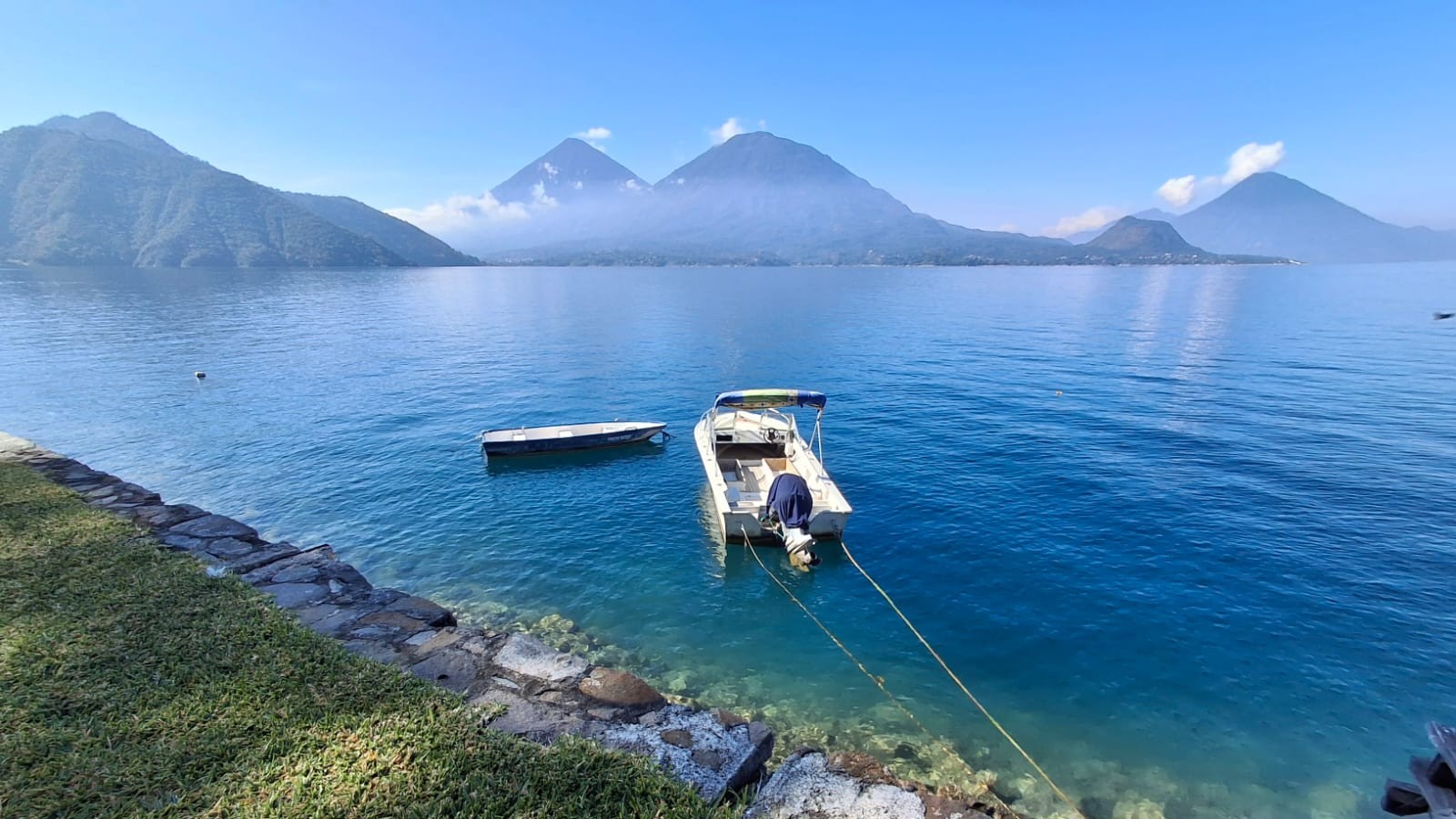
A few of the doors we hold in Lago Atitlán. Each is woven into a larger, bespoke journey.
A private launch at first light; coffee from beans your captain harvested. Stillness, then stillness.
DiscoverSit a second afternoon with a master of the backstrap loom in Santiago Atitlán.
DiscoverA quiet ceremony with a Maya guide, using cacao grown and ground on the lake’s slopes.
DiscoverOut before the village wakes, paddling the glassed water beneath the waking volcanoes.
DiscoverThe captain cut the engine in the middle of the lake and we simply sat. No one spoke. It is the quietest I have ever been.L. R. · Guest, MMXXIV
Atitlán keeps two seasons. The dry months, November to April, bring clear mornings and the best chance of seeing all three volcanoes uncovered. The green season, May to October, brings dramatic afternoon storms and a lush, near-empty shore.
Whatever the month, the water is calmest at dawn. By late morning the xocomil — the wind that "carries away sin" — rises off the slopes and roughens the surface. We plan every crossing around that single fact.
Tell us what draws you here, and we will compose the rest.
Begin Your Journey